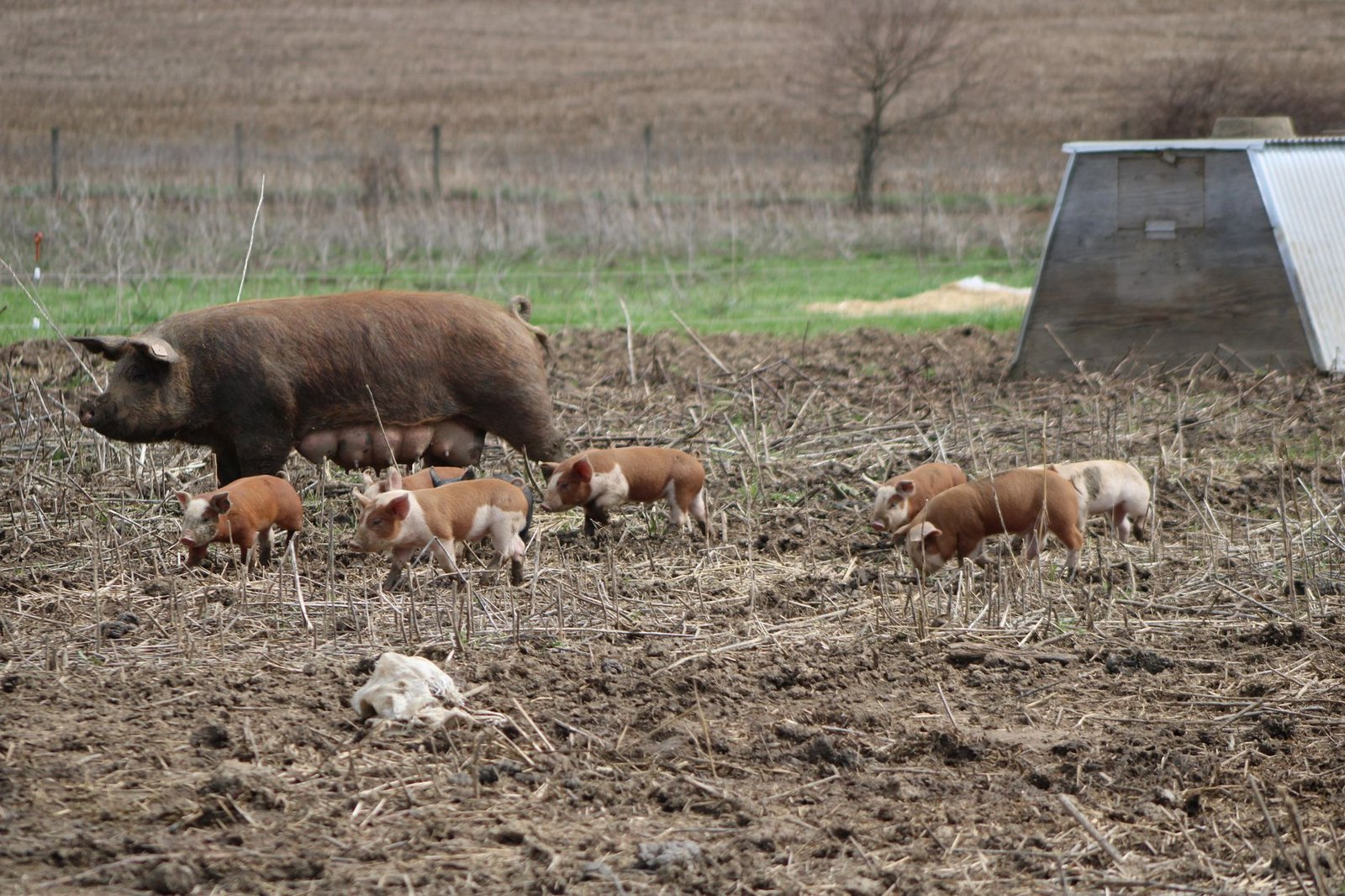
Of all the meat in the cabinet, pork is where labels do the most work and reveal the least. A pack might say free-range, outdoor-bred, bred-free-range, sow-stall-free or simply farm-fresh, and a shopper trying to do the right thing is left guessing how the pig actually lived. Pasture-raised pork sits at the top of that pile: pigs that spend their whole lives outdoors, with soil to root in, mud to wallow in, and room to behave like pigs. It usually tastes better too. The catch is that some of those labels describe a genuinely outdoor life and some describe only the first few weeks of one.
This guide cuts through it. It explains what pasture-raised pork really means in Australia, how it differs from free-range, outdoor-bred and barn-raised pork, why the welfare details matter, and how to find and order the real thing. It finishes with a curated set of specialist butchers and farms from the directory that stock free-range, pasture-raised or organic pork. If you would rather skip straight to suppliers, you can browse organic and free-range producers by location at any time.
What "pasture-raised pork" actually means
Pasture-raised pork comes from pigs that live outdoors on pasture or in paddocks for the whole of their lives. They have access to soil, shade, shelter, a wallow to cool off in, and enough space to root, forage and roam. That outdoor life is the entire point: pigs are intelligent, active animals, and rooting in the ground is one of their strongest natural behaviours. A pasture system lets them do it.
The important thing to understand is that "pasture-raised" is not a single, legally defined term in Australia. There is no government stamp that the word alone guarantees. That does not make it meaningless, but it does mean the strength of the claim depends on the farm behind it. The most trustworthy pasture-raised pork is either certified, for example under an organic standard, or comes from a producer who is openly transparent about how the pigs are kept. The simplest question you can ask any seller is the one that matters most: are the pigs outdoors for their whole lives, or only at the start?
Free-range, outdoor-bred and bred-free-range: the labels decoded
This is where most of the confusion lives, because three similar-sounding labels describe very different lives. Here is the honest breakdown.
Free-range pork
Free-range generally means the pigs are kept outdoors on range for the whole of their lives, with shelter, space and the ability to forage. It is the closest mainstream label to pasture-raised, and the two are often used to describe the same kind of system. Because there is no single mandated legal definition in Australia, the strongest free-range pork is backed by an industry standard or certification, so it is worth checking what stands behind the words.
Outdoor-bred and bred-free-range pork
These are the labels that trip people up. Outdoor-bred and bred-free-range mean the piglets are born outdoors to sows kept on range, but they are then moved indoors, usually into large group housing on straw or deep litter, to be grown out to slaughter weight. In other words, the pigs spend only their first few weeks outside and the rest of their lives in a shed, albeit a more spacious, bedded one than an intensive system. It is better than a fully intensive operation, but it is a long way from a pig that lives its whole life on pasture. If welfare is your reason for buying, read these labels carefully.
Barn-raised and conventional pork
Barn-raised or shed-raised pork comes from pigs kept indoors throughout, typically in group pens. Conventional intensive pork can involve closer confinement again. Neither offers the outdoor life that pasture-raised and free-range describe.
The one question that cuts through it: "Are these pigs outdoors for their whole lives?" Full free-range and pasture-raised answers yes. Outdoor-bred and bred-free-range answer no, only at the start. Everything else is detail.
How the labels compare
Here is the same information as a quick reference, from the most outdoor life to the least.
| Label | What it usually means | Outdoors for life? |
|---|---|---|
| Certified organic | Audited standard covering feed, land, welfare and treatments; pigs are free-range | Yes |
| Pasture-raised | Lives outdoors on pasture or paddock; meaning depends on the farm | Yes |
| Free-range | Kept on outdoor range; strongest when backed by a standard | Yes |
| Outdoor-bred / bred-free-range | Born outdoors, then grown out indoors on straw or deep litter | No, only the first weeks |
| Barn-raised | Kept indoors in group pens throughout | No |
| Conventional / intensive | Indoor systems, often with closer confinement | No |
Why it matters: sow stalls, crates and welfare
The strongest reason to seek out pasture-raised pork is animal welfare, and the issue that defines it is confinement of breeding sows. A sow stall is a narrow metal pen that holds a pregnant sow so tightly she cannot turn around, sometimes for much of her pregnancy. Australia's pork industry voluntarily committed to phasing out long-term sow stall use from 2017, which was a genuine step forward. But farrowing crates, the smaller pens used around the time of birth to stop sows crushing piglets, remain common in conventional systems.
Genuine free-range and pasture-raised farms work differently. Sows live outdoors in paddocks with huts or arcs to farrow in, room to build a nest, and freedom to move. Avoiding stalls and crates is a defining feature of the better systems, not an optional extra. When you pay more for pasture-raised pork, this is a large part of what the premium buys: a breeding herd that has not been confined. If that is your reason for shopping carefully, it is worth asking a butcher specifically how the sows are kept, not just the grow-out pigs.
Pasture-raised is not automatically organic. Certified organic pork meets an audited standard and is always free-range, but a pasture-raised label on its own is not independently checked. Trust pasture-raised most when it comes with certification or a farm that is open about its system. We unpack the certification system in our guide to what certified organic means for meat in Australia.
Does pasture-raised pork taste better?
Often, yes, and there are real reasons for it. Pigs that move freely, forage and grow more slowly tend to lay down more intramuscular fat, the marbling that carries flavour and keeps the meat juicy. The pork is frequently a deeper colour, the fat is firmer and more prized, and the crackling crisps beautifully. Many pasture producers also raise heritage breeds such as Berkshire, Large Black, Tamworth or Wessex Saddleback, which were bred for flavour and fat rather than the lean, fast growth favoured by intensive systems. Add slower growth and an outdoor life to a good breed and the eating quality usually shows it. Results vary from farm to farm, but the combination is what drives the difference, and it is why chefs and charcuterie makers chase free-range and pasture pork.
The cuts, and how to cook them
Better pork rewards a little more know-how, because the fat that makes it special wants slightly different handling. A quick guide to the main cuts:
- Shoulder (also called scotch or boston butt): the workhorse. Marbled and forgiving, it is made for slow roasting and pulled pork. Hard to overcook, big on flavour, and usually great value.
- Belly: the crackling cut. Roast it slow then blast the rind, or cure it for bacon. Pasture pork belly with its firmer fat is hard to beat.
- Loin and cutlets: leaner and quicker. Cook to just done and rest, rather than well past, so the lower-fat cuts stay juicy. Pork can be safely cooked with a touch of pink.
- Leg (ham): the classic roast, or the basis of a home-cured ham. Score the rind for crackling.
- Hock, trotters and bones: the cheap, flavour-rich bits. Brilliant for stock, braises, ragu and broth, and they make the whole animal go further.
- Mince and sausages: easy entry-level value. Free-range pork mince makes excellent meatballs, ragu and dumplings.
Buying cheaper cuts is also the smartest way to keep pasture-raised pork affordable: a slow-cooked shoulder feeds a crowd for a fraction of the per-kilo cost of cutlets, and the flavour is arguably better. For more on reading what is on the pack, see our meat labels explained guide.
Where to buy pasture-raised and free-range pork
Genuine free-range and pasture pork comes mostly from specialist butchers, organic grocers and farm-direct producers rather than supermarket cabinets. Below is a curated set of operators from the directory that stock free-range, pasture-raised or organic pork, with their public Google ratings as a rough guide to the shop, not a meat score. Confirm current range, hours and exactly how the pork is raised directly with each business before relying on it.
The Good Farm Shop
A Brookvale specialist focused on free-range and pasture-raised meat, including free-range pork. Rated a perfect 5/5 from 521 reviews, one of the most loved meat shops on the northern beaches and an obvious first stop for pasture pork in Sydney.
Feather and Bone Providore
An inner-Sydney providore built around biodynamic, pasture-raised and organic sourcing, with free-range pork in the range. Rated 4.8/5 from 389 reviews and known for naming its farms, which is exactly what you want to see.
Australian Organic Meat Co
A Brisbane-side butcher specialising in certified organic, grass-fed and free-range meat, including free-range pork. Rated 4.9/5 from 83 reviews. A strong pick if you want the certification stamp behind the pork.
Grange Meat Co
A Melbourne specialist stocking free-range pork alongside ethically raised, chemical-free produce and game. Rated 4.9/5 from 149 reviews, a good Victorian option for free-range pork and something a bit different.
Free Range Butcher
A Central Coast butcher built entirely around grass-fed and free-range meat, with free-range pork in the cabinet. Rated 4.9/5 from 77 reviews. The whole-shop free-range focus makes it easy to trust the sourcing.
Australian Meats
An Adelaide supplier carrying grass-fed, free-range and organic meat, including free-range pork. Rated 4.9/5 from 662 reviews, by far the most-reviewed name on this list and a reliable South Australian option.
How we chose these: all six are well-rated operators that clearly state free-range, pasture-raised, certified organic or biodynamic sourcing and list pork in their range. This is a starting point, not a strict ranking, and a great local producer near you may not appear here. Two more worth knowing are The Olive Place Deli at Byron Bay (4.9/5 from 102 reviews, free-range and organic) and Sunshine Coast Organic Meats at Forest Glen (certified organic and free-range). Use the directory to find suppliers in your own suburb.
How to order pasture-raised pork
Once you have found a supplier, a few habits make sure you get the real thing and the best value:
- Ask the outdoor-for-life question. Whether in store or by phone, ask whether the pigs live outdoors their whole lives and how the sows are kept. A genuine free-range or pasture producer will answer happily and specifically.
- Look for the standard behind the word. Certified organic, a named free-range certification, or a transparent farm story all beat a bare "natural" or "farm-fresh" claim. If there is no logo and no detail, treat the claim as unverified.
- Buy whole and bulk to save. Many farms and butchers sell mixed pork packs, half pigs or freezer boxes that bring the per-kilo price well below cut-by-cut buying. Pasture pork freezes beautifully.
- Lean on the cheaper cuts. Shoulder, belly, hock and mince deliver pasture-pork flavour at a fraction of the price of cutlets, and most suit slow cooking.
- Buy farm-direct when you can. A farm gate or farm-direct butcher is the shortest supply chain and the clearest answer about how the animals lived.
For background on why outdoor, slower-grown animals eat differently, our explainer on grass-fed versus grain-fed covers the same principle in beef and applies neatly to pork.
The bottom line
Pork labelling rewards a sceptical shopper. Pasture-raised and full free-range describe pigs that live outdoors for life, and that, more than any other factor, is what you are paying for when you trade up. Outdoor-bred and bred-free-range sound similar but mean only a few weeks outside, so read past the headline. Look for certification or a farm that names its system, ask whether the pigs are outdoors for life and how the sows are kept, lean on the cheaper cuts to keep it affordable, and start from specialists like The Good Farm Shop, Feather and Bone and Australian Organic Meat Co. Then it is just deciding between a slow-roast shoulder and a tray of belly for crackling.