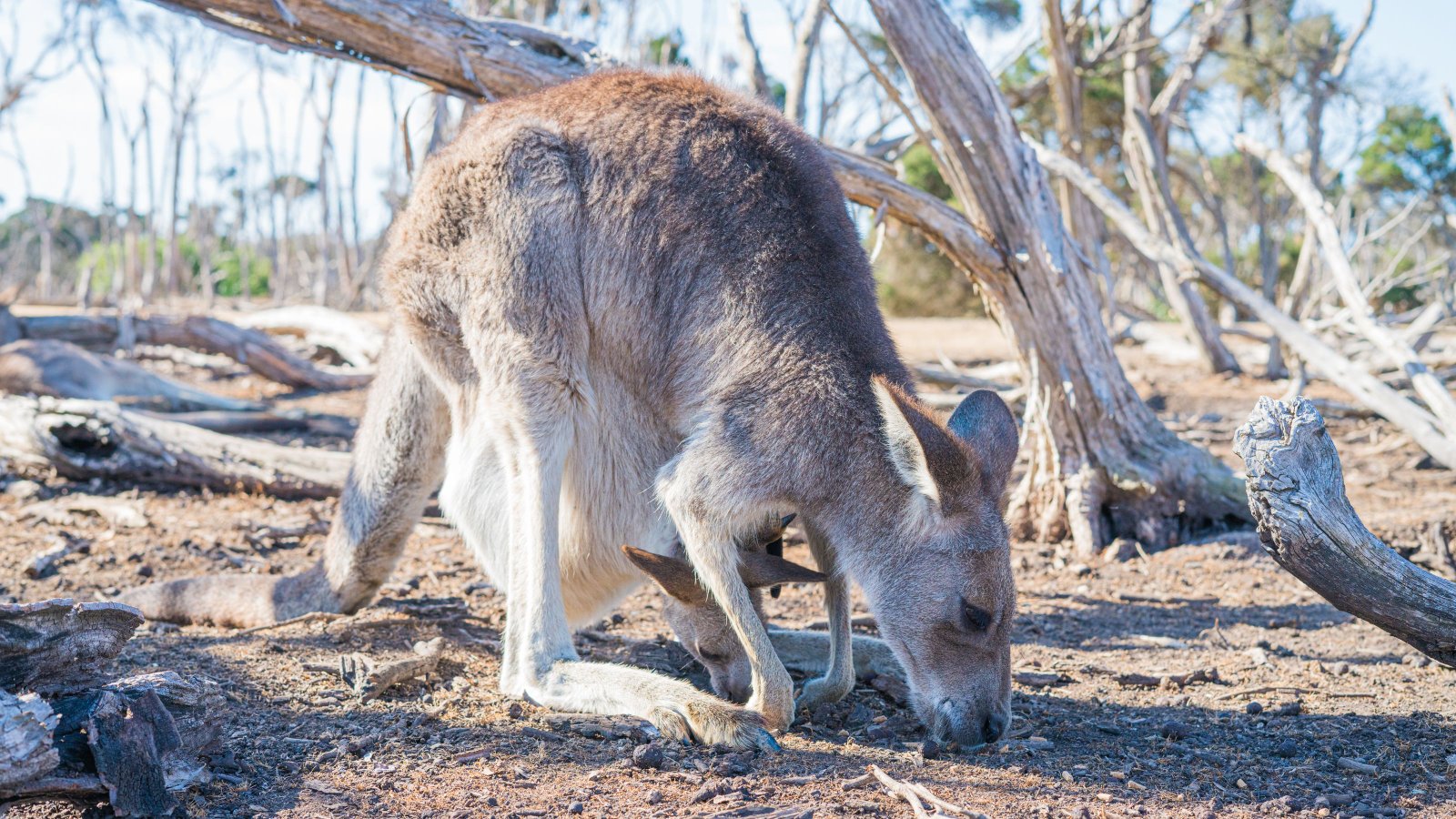
Most of the meat we eat starts life on a farm, and the organic movement grew up around making those farms cleaner: no synthetic chemicals, no routine antibiotics, audited feed and land, and a certificate at the end of it. Kangaroo sits outside that whole system, and that is exactly what makes it interesting. No one farms wild kangaroo. It is a native animal that lives its entire life free in the bush, eating nothing but the grasses and plants it grazes, and it reaches your plate through licensed wild harvest rather than a feedlot. For a lot of shoppers chasing the cleanest possible red meat, that is the appeal in a single sentence: it is about as far from an intensive farm as protein gets.
This guide covers the practical stuff first, where to actually buy kangaroo in Australia, and then works through the honest labelling question, the cuts, the nutrition, the sustainability case, and how to cook it. If you would rather just start looking for a supplier near you, you can browse game and organic meat suppliers in the directory. But it is worth understanding what you are buying, because kangaroo rewards a bit of knowledge more than almost any other meat on the shelf.
The honest bit about "organic" kangaroo. Wild kangaroo cannot be certified organic in the normal farmed sense. Organic certification is built around managed farms with audited feed, land and treatments, and a wild animal has none of those, there is no farm to inspect. So be wary of any pack that stamps a "certified organic" logo on wild kangaroo, because the claim does not really apply. What kangaroo genuinely is: free-ranging, grass-fed by nature, and raised with no hormones, antibiotics, grain finishing or feedlots. That is why it fits an organic and clean-eating ethos, as the naturally chemical-free red meat, even though it sits outside the certification scheme.
Where to buy kangaroo meat in Australia
Kangaroo is easier to find than most people assume. Every major supermarket carries fillets and mince, but the range and quality jump when you go to a specialist game butcher or a butcher who takes game seriously. These are the operators to know, with their public Google ratings as a rough guide to the shop experience rather than a meat score. Always confirm current stock, cuts and hours directly with the business.
Gamekeepers of Australia
A dedicated Melbourne game specialist stocking grass-fed, free-range and game meats including kangaroo and venison, sourced from producers focused on ethical supply. Rated 4.3/5 from 62 reviews.
The Kangaroo Island Stall 17
An Adelaide stall carrying kangaroo, emu and organic produce, the kind of market-style specialist that knows its game meat. Rated 4.9/5 from 38 reviews, the highest-rated dedicated kangaroo source on this list.
NQ Game Meats
North Queensland's game butcher in Townsville, listing kangaroo and venison alongside wild-caught and organic lines for shoppers who want ethically sourced protein. Rated 4.3/5 from 21 reviews.
Crossroads Game Meats
A South Australian game butcher trading on honest, quality meat, with kangaroo front and centre of the range. Rated 4.8/5 from 12 reviews.
Beyond the dedicated game shops, several strong general butchers and grocers carry a reliable kangaroo line. Australian Meats at Athol Park in Adelaide is a heavily reviewed butcher (4.9/5 from 662 reviews) listing kangaroo and venison in its range. Super Butcher Browns Plains in Queensland (4.6/5 from 374 reviews) carries kangaroo among its grass-fed and free-range meats, and Kingston Game Meats in Melbourne runs a premium game range covering kangaroo and crocodile. Down in Tasmania, Lenah Game Meats of Tasmania at South Launceston is a dedicated game butcher listing kangaroo and venison, and in the west Mahogany Creek Distributors at Malaga and Caves Farm at Cowaramup in the Margaret River region both carry kangaroo alongside other game. For a wholefoods option, Glenelg Health & Wholefoods in Adelaide stocks kangaroo within its organic range.
How we chose these: these are established, well-rated operators in the directory that genuinely list kangaroo or game meat. It is a starting point, not a strict ranking, and a great game butcher near you may not appear here. Ratings reflect the shop overall, not a meat score. Use the directory to find a supplier in your own state or suburb, and always check they have the cut you want in stock before you drive.
Why kangaroo is the ultimate free-range red meat
Terms like free-range and grass-fed get stretched thin on farmed-meat labels, where they can describe anything from genuinely pastured animals to a technicality. With kangaroo there is no stretching involved. A wild kangaroo is never confined, never grain-finished and never fed anything a human chose for it. It grazes native grasses and plants across open country for its whole life. That is free-range and grass-fed in the most literal sense of both words, not as a marketing claim but as a simple description of a wild animal. The catch, and the reason it cannot be certified organic, is that no one manages that diet or that land. It is not audited, it is just wild. For a shopper, the trade is straightforward: you give up the paperwork of certification and you get the reality of a truly wild diet instead.
This is why kangaroo belongs in a conversation about organic and clean eating even though it never carries an organic logo. If your reason for buying organic is to avoid hormones, routine antibiotics, grain-and-feedlot finishing and intensive farming, wild kangaroo delivers all of that by default. It just gets there by a completely different route. For the fuller picture on how the farmed labels compare, our guide to meat labels explained breaks down organic, grass-fed, free-range and pasture-raised, and our explainer on what certified organic actually means for meat covers why certification exists in the first place.
Kangaroo cuts and how to use them
Kangaroo is sold in a familiar spread of cuts, and because the meat is so lean, matching the cut to the cooking method matters more than with fattier meats. Here is a quick reference to the cuts you will most often see and what each is best for.
| Cut | Best for | How to cook it |
|---|---|---|
| Fillet / loin | The premium quick-cook cut, tender and mild | Sear hard, rare to medium-rare, then rest. Never past medium. |
| Rump / topside steak | Everyday steaks and stir-fries | Fast and hot, slice against the grain, keep it pink. |
| Mince | Burgers, meatballs, bolognese, san choy bau | Add a little fat or oil; do not cook it dry or grey. |
| Sausages | Everyday grilling with a game edge | Grill or pan-fry gently over medium heat. |
| Tail | Rich, gelatinous slow cooking | Braise low and slow for soup, stew or curry. |
| Diced / stewing | Curries, casseroles, pies | Brown, then slow-cook in liquid until tender. |
The nutrition case: lean, iron-rich and clean
Nutritionally, kangaroo is one of the standout red meats. Around 100 grams of raw kangaroo delivers roughly 22 grams of protein for under 100 calories, with less than 2 percent fat, which is dramatically leaner than most beef or lamb. It is a strong source of iron, carrying more than typical beef and far more than chicken, which makes it useful for anyone managing low iron. It is rich in zinc and vitamin B12, and because the animals live entirely on wild pasture, kangaroo is one of the better natural sources of conjugated linoleic acid (CLA) and long-chain omega-3 fatty acids, the same nutrients grass-fed farmed meat is prized for. In short, it hits the protein and micronutrients people want from red meat while carrying almost none of the fat load that comes with grain finishing. The one thing to respect is that leanness in the pan: with so little fat, kangaroo overcooks quickly and turns dry, so how you cook it decides whether that nutrition arrives as a great meal or a tough one.
Nutrition at a glance (per 100g raw, approximate): around 22g protein, under 2g fat, roughly 98 calories, a strong iron and zinc source, rich in vitamin B12, and a natural source of CLA and omega-3. Figures vary a little by cut and supplier; check the pack for exact values.
Sustainability: the low-footprint red meat
The environmental argument for kangaroo is one of the strongest of any meat in Australia, and it follows directly from the fact that it is wild. Kangaroos are native animals that already live on the landscape. They need no cleared pasture, no irrigation, no feed crops, no fencing and no sheds. They are soft-footed, so they tread far more lightly on soil than hoofed cattle and sheep, and they produce markedly less methane than either. Because they eat only native vegetation and are harvested under quotas set and monitored by state governments to keep populations sustainable, kangaroo carries one of the smaller land, water and emissions footprints of any red meat you can put on the table. For a shopper weighing up the climate cost of what they eat, that is a meaningful part of the case, and it sits naturally alongside the clean-eating reasons for choosing it.
How to cook kangaroo so it stays tender
If there is one thing to take away, it is this: treat kangaroo like a very lean steak or like venison, never like a fatty beef roast. For fillets, loin and steaks, the rule is hot and quick. Get the pan or grill properly hot, add a little oil since the meat brings almost none of its own, sear to rare or medium-rare, and then rest it properly so the juices redistribute. Push it past medium and it dries out fast. The flavour is a clean, mildly gamey richness, closer to lean beef or venison than anything exotic, and a splash of acid or a fruit-based sauce pairs with it beautifully. Mince and sausages are more forgiving and suit burgers, ragus and grills, while the tail and diced cuts are made for the opposite approach, long slow braising that turns their connective tissue silky. Master the fast-and-rare technique for the prime cuts and the low-and-slow technique for the tough ones, and kangaroo goes from intimidating to one of the easiest weeknight proteins you can buy.
The bottom line
Kangaroo is not certified organic, and any label claiming it is should make you pause, because you cannot certify a wild animal the way you certify a farm. What it is instead may matter more to you: genuinely wild, genuinely free-ranging, grass-fed by nature, free of hormones and antibiotics and feedlots, exceptionally lean and nutrient-dense, and one of the lowest-footprint red meats on the continent. If the reason you shop organic is to eat clean, natural protein raised as far from intensive farming as possible, kangaroo answers that better than almost anything with a certificate on it. Start with a specialist game butcher such as Gamekeepers of Australia, The Kangaroo Island Stall or NQ Game Meats, cook the prime cuts hot and rare, and use the directory when you want a supplier closer to home.